

Editorial Note: Republished from the original AnankeWLF site. Stay tuned for our new website and upcoming details on the Ananke Literature Festival.
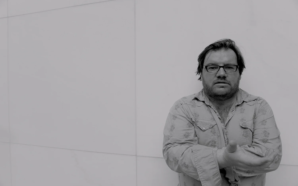
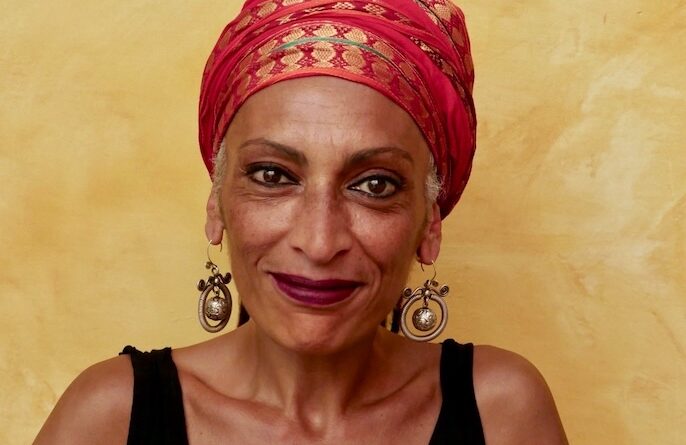
Born in 1965 in Addis Ababa, Ethiopia, Myriam Tadessé has lived in Paris since 1978. She studied theatre, philosophy, dance, music, and internal martial arts. An actress and stage director, she has taught theatre and dance to children and adults who did not previously have access to the arts, written and directed documentaries, and published a narrative titled L’instant d’un regard about her experience as a child of the Ethiopian Revolution. Since 2017, she has devoted herself to writing and has published a book with Seagull Books, Blind Spot, a memoir exploring the realities of being a biracial French citizen. In relation to her exploration of the intimate, she is currently pursuing training as an analytical therapist.
- Do you think there is a connection between the socio-political ideologies of a country and how works of literature—and those who create or produce them—are perceived?
Of course, for the simple reason that everything is linked! Now, once you say that, you haven’t said much. There are several components to your question: the literary production on the side of the authors; the publication and diffusion of these works on the side of the publishers; and finally, the reception—in other words, the public. Each has its share of responsibility in this story, which is a co-creation of the three. Rather than “connection,” I prefer to speak of “inter-connection.”
Socio-politics is an important factor, but it is not the only one. It is a context, not the intimacy of the person. It is to the person that literature is addressed—the literature that interests me, at least—and it can contribute to giving them back their dignity. As closed or locked as a system may be, making it difficult to receive a literary work, we must not forget that if someone was able to write it, it is because someone else, somewhere, felt the need to read it.
- From being a child of the Ethiopian Revolution to experiencing the realities of being a biracial French citizen, how does that influence your creative process?
As I explain in my book Blind Spot, being mixed-race was never a “subject” for me; it became one only through the gaze of others—later in France and, more specifically, as an actress in the world of theater and the audiovisual arts. Until then, I was simply the child of my parents, whom I did not see as white or black, but as mother and father. Just as at school and in my family, I was not looked at as mixed-race, but simply as Myriam.
As for the experience of the revolution, it was for me a rupture in a world that, while varied and crossed by tensions, was nevertheless coherent and united. It was brutally split into camps—blocks that confronted each other, switching from “one and the other” to “one or the other.” In France, as an actress, I was asked to be this or that, white or black. All of this undoubtedly gave me the desire to understand what lay behind these divisions—in other words, the human being. To create—to respond and open possibilities rather than simply submitting—was a way of seeking a space of integrity.
- Can you share your thoughts on identity and belonging when it comes to gender, especially with women often being the “face” of displacement, dislocation, and migration?
Identity and belonging cannot be theoretical answers; they are a quest. They are a living, moving experience. It is a relationship: with myself, others, different cultures, different sensibilities, and the living world. Your question deals with political and anthropological aspects that are perhaps too complex to be discussed in a few lines.
The problems we face today concern the very survival of our humanity. It is not a question of gender, but of energy. There is an obvious imbalance between feminine and masculine energies, and the challenge addressed to each of us is to move from a logic of confrontation to one of cooperation—what in psycho-spiritual terms is called moving from the hierarchy of power to the hierarchy of competence. This shift cannot be made from the “top,” but by each of us individually. Women, as those who give life (which I do not limit to the biological sense) and care for it, have an enormous and magnificent responsibility in this evolution. They must recognize themselves in their power of life, for life. Isn’t the first exile, from which all others flow, the act of being disconnected from one’s source, which is love?
- Looking at a woman’s journey through the intersections of gender, migration, and marginalization, how does that transmute into her lived experience within a patriarchal society?
To begin with, the patriarchal system is not, and has never been, my reference; Life is. Probably because I come from a family where the women on both my father’s and mother’s sides were very strong—maybe too much so… I did not feel constrained by a patriarchal system, but rather by the “almighty power” of the mothers.
The difficulties I encountered in finding a place in society led me to look inside for what I was seeking “outside.” I questioned this matter of belonging, of place, and of identity. What do I really want? What is the nature of the recognition I aspire to? For whom and from whom? Do I really want to be part of this system? Is it about fighting it or transforming it? And how can this transformation take place if not first within oneself?
As the singer Alfred Deller said: “Music is not about the notes; it’s what’s between the notes.” In this way, the elements of my story are merely the notes from which it is up to me to make a song. What raised my desire for this song was the love for my daughters. They pushed me to cross my limitations because I did not want to pass those constraints on to them. Wanting them to be free, responsible, and creative pushed me to take responsibility for my own existence.
I’m not saying it’s easy, but it is what inspired and guided me. Finally, I saw the fact that I didn’t fit into any box as an opportunity—an invitation to create and to join the much larger and more exhilarating flow of life. I feel deeply grateful because that flow has always supported me. It’s a constant process. The difference now, when I feel like I’m drowning or stuck, is that I know it’s just a passing moment, not a condemnation. When this happens, it is often because I have forgotten that something in me knows how to swim.
- While women’s lived and imagined experiences are being highlighted more frequently now, censorship is a socio-political force that often impacts women—and specifically women of color—disproportionately. Do you think gender and race-based censorship is more pervasive than organized suppression, or are they simply different names for the same oppression?
From my point of view, they are all part of the same oppression called fear—which is rooted in ignorance and the forgetfulness of love.
- Lastly, do you think events like Anank’s Festival of Literature can create an impact and trigger meaningful dialogue?
Yes, I believe this simply because, as beings of language, we need conversation to learn about ourselves in relation to others, to be inspired, and to celebrate our lives!