

This interview has been previously published in Ananke’s Special Edition “Voices 2026”
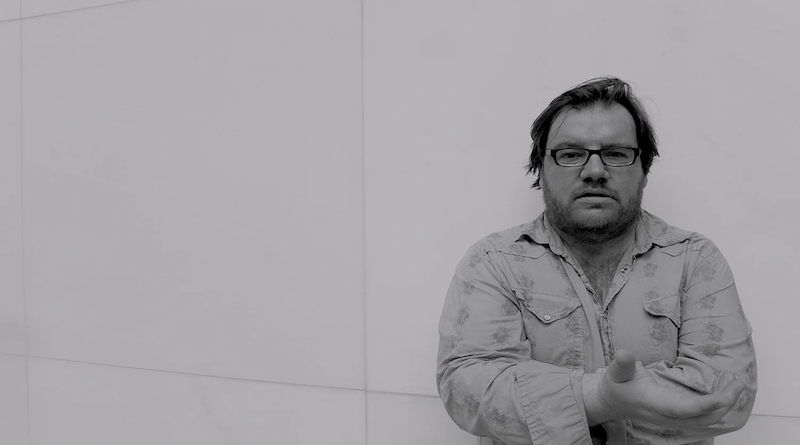
Sinan Antoon is an acclaimed Iraqi poet, novelist, scholar, and translator. Born and raised in Baghdad, he moved to the United States following the 1991 Gulf War, eventually earning a doctorate in Arabic Literature from Harvard in 2006. Antoon is the author of five novels and three poetry collections. His celebrated work, The Corpse Washer, won the 2017 Prix de la Littérature Arabe and received numerous international honors. His subsequent novels, including The Baghdad Eucharist and The Book of Collateral Damage, have been recognized by the Arabic Booker prize and translated into several languages.
Beyond his fiction, Antoon is a distinguished translator; his English rendition of Mahmoud Darwish’s In the Presence of Absence earned the 2012 National Translation Award. A frequent contributor to major outlets like The New York Timesand The Guardian, he also co-directed the 2004 documentary About Baghdad. Currently, Antoon serves as an Associate Professor at New York University’s Gallatin School and is a co-founder of Jadaliyya. You can follow him on twitter: @sinanantoon
Antoon holds degrees from Baghdad, Georgetown, and Harvard, where he specialized in Arabic literature. He has published five novels and two poetry collections. His most recent work is Postcards from the Underworld (Seagull, 2023). His translation of Mahmoud Darwish’s In the Presence of Absence won the 2012 American Literary Translators’ Award. He is an associate professor at New York University.
-
What is the role, responsibility and impact of a writer?
That would depend on how a writer views the world and how they think of or understand the relationship between writing and the material world. Which ideological position they inhabit. Writing is an act with consequences. What kind of world do our text remember, represent, or imagine? Whose voices and stories do we amplify? Which ones do we un/consciously ignore? Texts employ history and encode truth. Truth and beauty.
-
What role can translation and language play when it comes to subversion: can the translator’s voice challenge ideologies and dominant narratives? How do works of translation speak truth to power?
Translation does not take place in an egalitarian world. The borders between languages and cultures (as hard as the latter might be to define) are fluid, but languages don’t interact on equal terms. Texts from the Global South have to cross checkpoints and borders and are subjected to symbolic violence. Sometimes we, translators, thanks to the solidarity and support of sympathetic editors and independent publishers, manage to successfully smuggle texts that challenge ideological assumptions and disrupt reigning narratives. The road is long, but we have to keep keeping on.
-
How do writers, poets, translators challenge weaponization of language in the backdrop of fear, hatred and therefore polarization?
Language has always mediated the world and existence for us. It has never been neutral. Its symbolic power can always be summoned to dream of and call for a better world and to save us from the abyss we are falling into. We have to be vigilant and critical and scrutinize the ways in which language is used by those who hold power and who perpetrate violence. The way language was used by those supporting and simultaneously denying the genocide in Gaza is a case in point. When legacy media aided the murder of Palestinians. There was and is discursive and epistemic violence that must be exposed and condemned. Always.
-
What is peace? What is liberty? Is there a distinction?
I’m afraid the word “peace” has been so debased and disfigures that it has to be flagged. When a war criminal is a member of “The Peace Board” and I’m speaking of Netanyahu and Trump’s board. When the Nobel prize is given to war criminals. I will answer your question with a question: Peace for whom? For the privileged and for criminals who wear three-piece suits and smile before the cameras after committing crimes or signing collective death certificates for masses of people? That is often what peace means in mainstream discourse. Peace, equality, and justice for all, not for the few. And this bears repeating: No justice, no peace.
-
In the backdrop of hate and fear… which have sadly become forces governing the world we live in today. Can works of art, poetry, literature be that catalyzing force that counters polarization and socio-political dissonance because if one looks closely … the common thread, across nations, is loss, grief and trauma: “the resilience of the human spirit amidst unimaginable suffering.” And the question that one arrives on is… is there hope?
Al-Tuhghra’i, a 12th century poet, said: “I console myself with hope and wait for it/How suffocating would life be without it.” There must be hope. Yes, works of art can shelter the voices and the agonies of the wounded, but hope needs to be nurtured with action and striving to change the world and fight for justice.
-
In one of your interviews, you remarked: “A worthy literary text ‘stays in mourning until it is translated’ and continues its afterlife in another language,’ Can you expand on that and also, is this afterlife transcendence?
I was paraphrasing a quote by Walter Benjamin. The image struck me when I first read it in Arabic many decades ago. A text stays in mourning and waits to be translated into another language. It’s about the potential beauty and generosity of translation and the loss of not being translated. There are millions in this world who can only read in their mother tongue and translating a text into a language gives it a new after/life.
-
Can you tell us something about your latest work? Are you working on something currently?
I recently finished translating my fifth novel from Arabic to English and it is coming out in March (Of Loss and Lavender). It is about two Iraqi refugees from different classes and generations who leave Iraq to the United States. One is a victim of the brutality of dictatorship in Iraq in the 1990s and upon arriving in the U.S decides to sever his bonds with Iraq and pretends to be Puerto Rican. The other left Iraq after the 2003 US occupation of Iraq and settles in Brooklyn. He tries to hold on to his memories, but is struck with dementia.
I am currently translating selected poems by the Palestinian poet Mahmoud Darwish.
-
Anything else you would like to add?
Thank you for this opportunity.