


“There are legends of people born with the gift of making music so true, it can pierce the veil between life and death, conjuring spirits from the past and the future. In ancient Ireland, they were called Filí. In Choctaw land, they called them Firekeepers. And in West Africa… they’re called Griots. This gift can bring healing to their communities… but it also attracts evil.” – The opening monologue from the movie, Sinners.
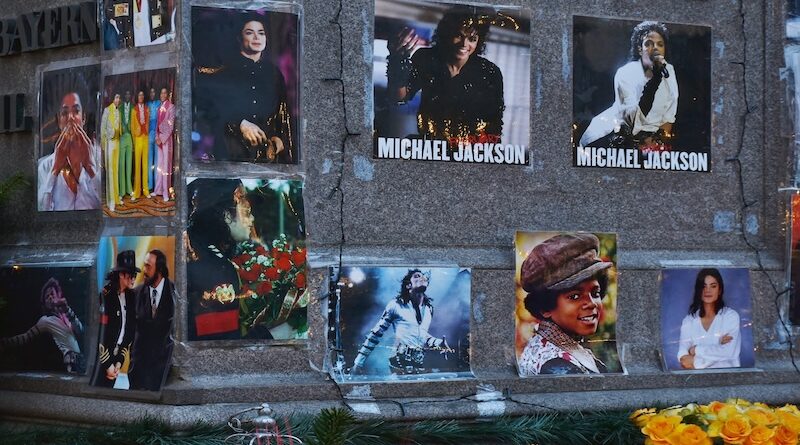
Music has produced many maestros, but none held magic quite like Michael Jackson. He seemed larger than life when he first burst onto our tellies and radios—a little crooner with a voice, rhythm, and charisma that captivated everyone. His was a fandom that spanned generations; a figure and a vision that broke all barriers, including ethnicity, religion, geographical boundaries, and even conflicts. But immense power attracts everything: the good, yes, the bad all the more.
Much has been written and spoken about Michael Jackson’s life—his journey from being a media darling to being labeled “Wacko Jacko” by the very same outlets who made sure ‘lies became the truth’. And as enthralling as the King of Pop was during his reign, it seems he has risen yet again with the premiere of his biopic, Michael. Played by his own nephew, Jaafar Jackson (son of Jermaine Jackson of the original Jackson 5), the movie attempts to celebrate the music and the man who once cast a spell on the entire world.
His is a story seemingly too difficult to tell. For his fans, however, his life is most certainly worth celebrating. News stories reveal the movie underwent several rewrites to actually make it to the screen. NDAs and legal disputes challenged what needed to be told and how, which still shrouds, if not mars, the narrative presented.
The movie speaks loudly through major absences, such as MJ’s youngest sister, superstar Janet Jackson. It also stops dead in its tracks regarding Diana Ross—an essential figure in Michael’s life. A Rolling Stone article shares that scenes with Diana Ross (played by Kat Graham) were cut at the last minute due to “legal considerations.” The article suggests that director Antoine Fuqua scrubbed the scenes because they related to a child sexual assault lawsuit Jackson faced in 1993.
Perhaps exploring that path might have raised questions that should have been addressed long ago. This includes not just his controversial legal battles—which are largely absent from the movie, as the movie ends in 1988 before they began—but his decades-long relationship with Ross, which started when he was a child and she was ten years his senior.
Could the seemingly innocent, flirtatious banter between a child star and an adult pop icon on TV shows lead to a top-charter like “Dirty Diana”? What was once called innocent banter might now be viewed through the lens of grooming. Furthermore, the biopic makes no mention of the musical fantasy movie The Wiz, where Jackson first began to professionally work with legendary producer Quincy Jones (he was first introduced to Jones at Sammy Davis Jr’s house aged 12). A life that was an intricate weave has been smoothed into a clean, albeit shiny and cherishable, slate.
Michael portrays the performer and his performances as truly ageless. Discussing the film, Michael’s daughter, Paris Jackson, stopped short of saying anything negative out of respect for her father’s gargantuan following. However, she revealed she had provided notes regarding her reservations; when they went unaddressed, she stepped back.
While searching for these missing answers may be in vain, after watching the movie, one feels that the King’s process of music-making—the creation of his art—did not shine as scintillatingly bright as it should have. The fact that Jackson brought two warring factions together for the song “Beat It” felt nuanced in the film. It wasn’t as representational as it could have been. His work wasn’t “just” pop; “Beat It” introduced rock-influenced solos to a massive pop audience. Eddie Van Halen collaborated on the track, contributing a 20-second solo using his famous “Frankenstein” guitar—a historic musical collaboration that went on to win two Grammys. His mini-movies, Thriller, Bad, and more were directed by the likes of John Landis (director of An American Werewolf in London – for Thriller) and Martin Scorsese for Bad. Spike Lee, Francis Ford Coppola and John Singleton directed songs that were not part of the movie but are worth the mention.
Michael was more than just an iconic entertainer or a legendary musical figure—he was an era unto himself, he was more. This is why audiences don’t want the movie to end; moviegoers want more. Whoever enters the cinema comes out crooning.
Image by -Rita-👩🍳 und 📷 mit ❤ from Pixabay